

Points On License: Driving Licence Points And DVLA Check Help
I remember the moment I received my first fixed penalty notice through the post. The letter was clear enough about the fine, but nowhere did it explain exactly how those three points would affect my insurance, my record, or my future as a driver. If you have received points, are about to check your licence for the first time, or simply want to understand how the system works before it catches you out, this guide covers everything you need to know about penalty points, DVLA check codes, endorsements, and disqualification thresholds under UK law.

Key Takeaways
- 12 points within three years triggers automatic disqualification for most drivers under the totting up process
- New drivers face revocation of their licence at just 6 points within the first two years of passing their test
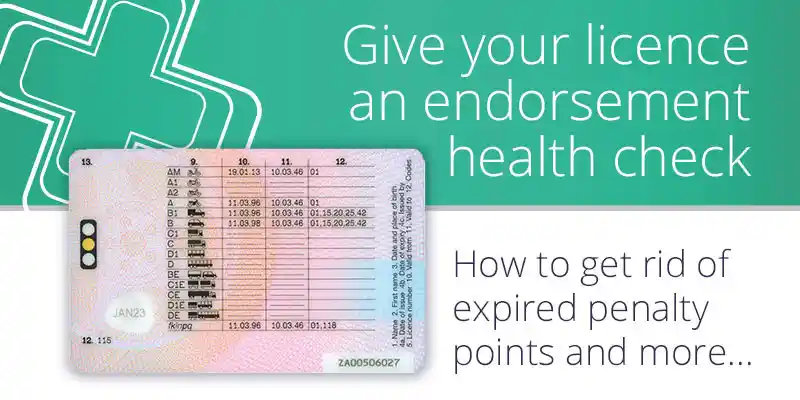
- Points do not appear on your physical photocard licence; they are held on the DVLA digital record only
- You can check your full endorsement history online at GOV.UK using your licence number and National Insurance number
- A DVLA check code is valid for 21 days and allows employers or hire companies to view your record with your permission
- Most speeding endorsements remain visible for four years but only count toward disqualification for three years
- Serving a ban does not automatically wipe your points from the DVLA record
Table of Contents
Points On License
Penalty points on a licence are a formal sanction recorded against your driving record when you commit a motoring offence in the United Kingdom. Think of them as a running tally, similar in concept to a credit score but working in reverse: the higher the number, the greater the risk you represent as a driver, and the closer you are to losing your right to drive entirely.
The system is governed primarily by the Road Traffic Offenders Act 1988, which sets out which offences carry which point values and the thresholds at which disqualification becomes mandatory. Points are not stamped onto your physical photocard licence. Instead, they are recorded digitally on the DVLA central database, accessible only through official government channels.
Here is the thing: many drivers assume their clean-looking card means a clean record. That assumption has cost people jobs, car hire bookings, and driving privileges. Your physical card tells you nothing. Your DVLA digital record tells you everything.
Points carry real-world consequences beyond the immediate fine. Insurance premiums typically rise significantly following an endorsement, employers conducting background checks for driving roles will see your history, and accumulating points puts you on a path toward a mandatory ban.
[Expert Quote Placeholder: Road traffic solicitor on the most common misconceptions drivers hold about penalty points and what their physical licence actually shows]
Driving Licence Points
Driving licence points are issued following specific motoring offences such as speeding, using a mobile phone at the wheel, running a red light, or driving without due care and attention. The number of points attached to each offence varies and is set by law.
Points reach your record through two main routes. The first is a Fixed Penalty Notice (FPN), which you can accept by paying the fine and accepting the points without going to court. The second is a court conviction, where a magistrate decides the outcome and the point allocation, which may be higher than the fixed penalty alternative depending on the severity of the offence.
Common Offence Codes and Point Values
| Offence Code | Description | Points Awarded |
|---|---|---|
| SP30 | Exceeding statutory speed limit on a public road | 3 to 6 |
| CU80 | Using a mobile phone while driving | 6 |
| DR10 | Driving with excess alcohol | 3 to 11 |
| IN10 | Using a vehicle uninsured against third-party risks | 6 to 8 |
| CD10 | Driving without due care and attention | 3 to 9 |
| TS10 | Failing to comply with traffic light signals | 3 |
Are Your Licence Points Closer To A Ban?
Most drivers don’t check their DVLA record until it’s too late. One more minor offence at 9 points triggers automatic disqualification — find out exactly where you stand today.
Driving Licence Check
Completing a driving licence check through the official GOV.UK service takes under five minutes and requires no account or registration. Here is exactly how to do it:
- Go to GOV.UK and search “check driving licence information”
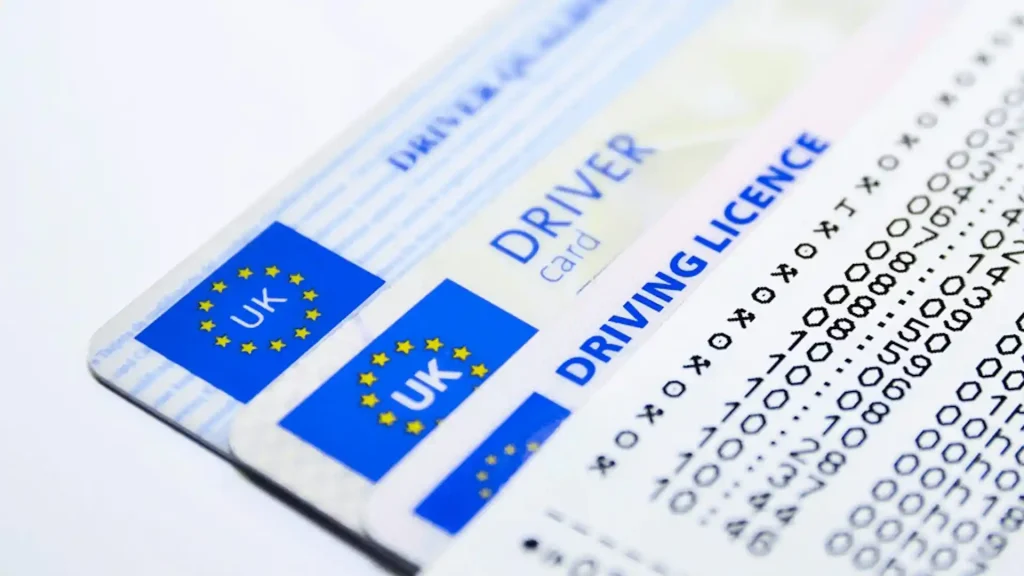
- Enter your driving licence number (found on the front of your photocard)
- Enter your National Insurance number
- Enter your postcode as it appears on your licence record
- View your licence status, categories, and any endorsements
The check shows your licence category entitlements (what vehicles you are legally allowed to drive), any endorsement codes and dates, the number of points currently active, and your licence expiry date.
[Internal Link: “driving licence number format” -> Guide to Reading Your UK Driving Licence]
What A Licence Check Shows vs What It Does Not Show
| Information Visible | Not Visible |
|---|---|
| Active endorsement codes | Spent endorsements past retention period |
| Points total | Points from other UK jurisdictions before transfer |
| Licence categories | Medical restriction details |
| Expiry date | Court fine payment status |
DVLA Check Code
A DVLA check code is a unique, time-limited code that allows a third party to view your driving record with your explicit permission. You generate it yourself; you share it voluntarily. No employer or hire company can access your record without it.
To generate a check code:
- Complete the GOV.UK licence check process described above
- At the end of your own check, select “Share your licence information”
- A nine-character code is generated instantly
- The code is valid for 21 days from the date of generation
- Share the code and your licence number with the requesting party
Employers running fleet checks, insurance underwriters, and car hire companies all use this system. In practice, car hire desks at airports will often ask for your check code alongside your physical licence before releasing a vehicle, particularly for international visitors or those hiring premium vehicles.
How Many Points Can You Have On Your License UK?
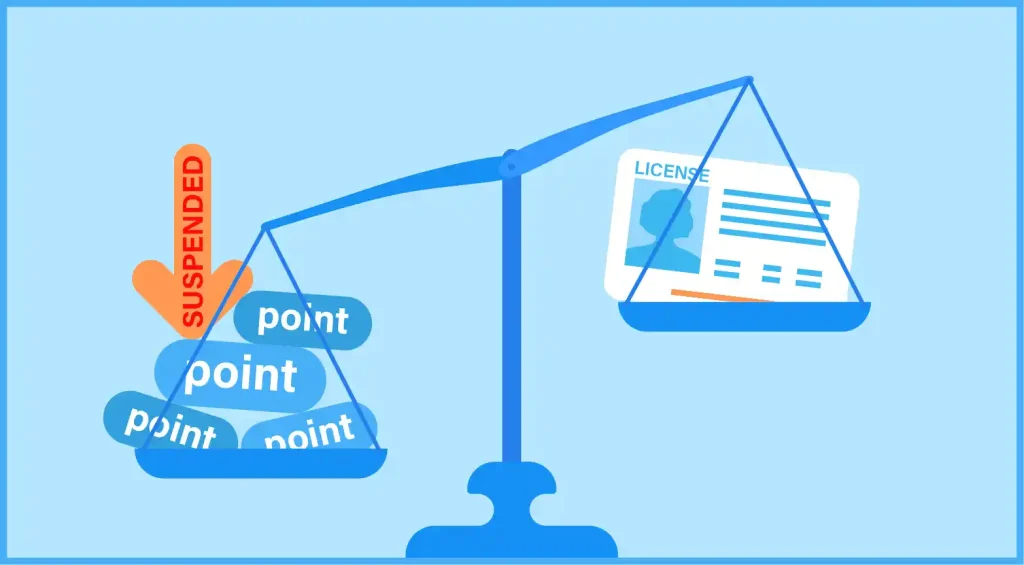
For most drivers, the legal maximum before automatic disqualification is triggered is 12 points accumulated within a three-year period. Reaching this threshold under the totting up process results in a minimum six-month driving ban unless exceptional circumstances apply.
The rules are significantly stricter for new drivers.
Under the New Drivers Act 1995, any driver who accumulates 6 or more points within the first two years of passing their driving test will have their licence automatically revoked. This is not a ban. Revocation means the licence is cancelled entirely, and the driver must reapply for a provisional licence and pass both the theory and practical tests again from scratch.
Points Thresholds By Driver Category
| Driver Category | Disqualification Threshold | Outcome |
|---|---|---|
| Standard licence holder | 12 points in 3 years | Minimum 6-month ban |
| New driver (within 2 years of passing) | 6 points | Licence revoked, must retest |
| Previous disqualification (within 3 years) | 12 points | Minimum 2-year ban |
| Two prior disqualifications | 12 points | Minimum 3-year ban |
How Thousands Of UK Drivers Protect Their Licence
Road traffic solicitors confirm that most drivers misunderstand what their physical card actually shows. Get expert-backed guidance used by drivers who’ve successfully argued exceptional hardship and kept their licence.
How Many Points To Lose Your License?
The totting up system is the mechanism by which the courts disqualify drivers who accumulate points across multiple offences. Once you reach 12 points, the court is required to disqualify you for a minimum of six months under Section 35 of the Road Traffic Offenders Act 1988.
So what does this look like in practice? A driver with 9 existing points who receives a further 3-point speeding fixed penalty has reached the threshold. The matter goes before a magistrates court, and unless exceptional hardship is demonstrated successfully, a ban follows.
Exceptional hardship is a legal argument, not a loophole. It must be proven to the satisfaction of the court that disqualification would cause hardship beyond the ordinary inconvenience of losing a licence. Losing your job because you drive for a living can qualify. The bar is intentionally high.
Typical disqualification lengths under totting up:
- First totting up ban: minimum 6 months
- Second ban within 3 years: minimum 12 months
- Third ban within 3 years: minimum 2 years
[Internal Link: “exceptional hardship driving ban” -> How To Argue Exceptional Hardship In A Magistrates Court]
6 Points On Driving Licence
Receiving 6 points on your driving licence typically results from either a single serious offence (such as mobile phone use, which carries 6 points as a fixed penalty) or two separate minor offences.
For new drivers, 6 points is the end of the road for their current licence. The revocation is automatic and administrative; no court hearing is required. The driver receives written notification from the DVLA and must surrender their licence.
For established drivers, 6 points represents the halfway point toward disqualification. The immediate practical impact is financial. Insurance premiums for drivers with 6 points can increase by 40% to 90% depending on the offence type and the insurer.
[HUMAN REVIEW NEEDED: Search for the latest UK insurance premium increase data for drivers with 6 points from a source such as Confused.com, Compare the Market, or the Association of British Insurers for an accurate and current figure]
Employers in transport, logistics, and any role requiring a company vehicle will conduct licence checks. Six points, particularly from a DR10 (drink driving) or CU80 (mobile phone) endorsement, can disqualify candidates from these roles entirely.
9 Points On License
Nine points places a driver in serious and immediate jeopardy. A single further minor offence, the kind that most drivers collect without a second thought, delivers disqualification.
At this stage, a driver should:
- Request a copy of their full DVLA record to confirm exact point totals and dates
- Seek legal advice before accepting any further fixed penalty notices, as it may be worth contesting an allegation rather than accepting certain disqualification
- Review insurance policy terms, as some policies contain clauses that void coverage if the driver becomes disqualified mid-term
- Inform their employer if their role requires driving, as many contracts require disclosure
The real question is: how did you get to 9? Understanding the pattern matters as much as the number.
Download The Complete UK Endorsement Code Guide
Every offence code from SP30 to DR10, all retention periods, and the exact disqualification thresholds — in one printable reference used before your next DVLA check or hire desk visit.
If You Get 3 Points On Your License What Happens?
Three points is the minimum penalty for most minor motoring offences. The most common cause is a SP30 endorsement from a speed camera, typically issued via a Notice of Intended Prosecution and resolved through either a fixed penalty or a speed awareness course (which avoids points entirely if offered and completed).
When you accept 3 points via a fixed penalty:
- The £100 fixed penalty is paid (or a court-set amount if convicted)
- 3 points are added to your DVLA record within approximately two weeks
- No court attendance is required for a standard fixed penalty acceptance
- Your insurer must be notified at renewal (and some policies require immediate disclosure)
Attending a speed awareness course instead means no points and no fine, but the course fee applies and it is only available to drivers who have not attended one in the previous three years.
Where Do Points Show On Driving Licence UK?
Points do not appear on the physical photocard driving licence in any form. The card itself does not update when points are added. This surprises many drivers, particularly those who expect a physical record of their offences.
All endorsement data sits on the DVLA central digital record. Employers can view it only via the official GOV.UK share code system. Drivers can view their own record through the same portal at any time without generating a share code.
You can also download and print a summary of your driving record from the GOV.UK licence check page after completing your verification. This document is accepted as an official summary in most employment and hire contexts where a physical print is requested.
Driving Licence Endorsements
Driving licence endorsements are the formal records of motoring convictions attached to your DVLA file. Each endorsement consists of a two-letter offence code, the date of conviction, the number of points, and in the case of disqualification, the length of the ban.
Common Endorsement Codes Explained
| Code | Offence | Points | Stays Visible |
|---|---|---|---|
| SP30 | Speeding on a public road | 3-6 | 4 years from offence |
| DR10 | Drink driving (excess alcohol) | 3-11 | 11 years from conviction |
| CU80 | Mobile phone while driving | 6 | 4 years from offence |
| IN10 | Driving uninsured | 6-8 | 4 years from offence |
| CD10 | Careless driving | 3-9 | 4 years from offence |
Endorsements influence how insurers calculate your premium, how employers assess your suitability for driving roles, and whether car hire companies will rent to you. A DR10 in particular is treated by most insurers as a high-risk signal for the full 11 years it remains visible.
How Long Do Points Stay On Your License UK?
Understanding the retention periods for endorsements is one of the most practically useful things a driver can know, because two different timelines apply simultaneously to every set of points.
The counting period is how long points count toward the totting up disqualification threshold. For most offences, this is three years from the date of the offence (not the conviction date).
The visibility period is how long the endorsement remains on your DVLA record and is therefore visible to insurers, employers, and hire companies. For most offences, this is four years from the date of the offence.
In simple terms: your points stop counting toward a ban after three years, but they remain visible on your record for a further year.
How Long Do Speeding Points Stay On Your License UK?
For the most common endorsement, SP30 (exceeding the speed limit on a public road):
- Points count toward disqualification for 3 years from the date of the offence
- The endorsement remains visible on your record for 4 years from the date of the offence
- After 4 years, the endorsement is removed from your DVLA record entirely
This means a speeding offence committed in January 2022 stops counting toward a ban in January 2025 but does not disappear from your visible record until January 2026.
Eleven Years From Date Of Conviction?
Certain serious offences carry a significantly extended retention period. Drink driving endorsements (DR10) and other alcohol or drug-related driving convictions remain on your DVLA record for 11 years from the date of conviction, not from the date of the offence.
The reason for the extended period is rooted in public safety. Drink driving recidivism data shows that drivers with one conviction carry a meaningfully elevated risk of reoffending. Insurers, employers, and licensing authorities need access to this history for longer to make properly informed decisions.
[External Link: “drink driving conviction effects” -> DVLA guidance on DR10 endorsement retention]
Do Points Get Wiped After A Ban?
This is one of the most common misconceptions I encounter. The answer is no. Serving a disqualification does not clear your endorsement record.
When your ban ends and you return to driving, your endorsements remain on your DVLA record for their original retention period. A DR10 received before a 12-month ban will still appear on your record for 11 years from the date of conviction regardless of when the ban was served.
In addition, if you were disqualified under the totting up system, you must be aware that any points accrued before the ban that have not yet expired will continue to count once you resume driving. This catches many returning drivers off guard.
Where a driver was disqualified for a period of 56 days or more, they must also reapply for their licence before driving again. This is not automatic reinstatement. For certain high-risk offenders, an extended driving test may also be required before the licence is restored.
Frequently Asked Questions About Points On License
How Many Points On License Are Allowed Before A UK Driving Ban?
For most drivers in the UK, the threshold is 12 penalty points accumulated within any rolling three-year period. Once this total is reached, the magistrates court is obliged to impose disqualification of at least six months under the totting up provisions of the Road Traffic Offenders Act 1988. There is no discretion to avoid the ban unless the driver successfully argues exceptional hardship. New drivers face a lower threshold of just 6 points within their first two years, at which point their licence is revoked rather than suspended.
What Is A DVLA Check Code And How Do You Generate One Online?
A DVLA check code is a nine-character, time-limited code that you generate through the official GOV.UK driving licence check portal. After verifying your identity using your licence number, National Insurance number, and postcode, you are given the option to share your licence information. Selecting this option produces the code, which remains valid for 21 days. You share the code voluntarily with anyone who has a legitimate need to verify your driving record, such as an employer, insurance provider, or car hire desk. The code grants them read-only, time-limited access to your DVLA endorsement history.
