

Full UK Driving Licence Meaning: Automatic Only Manual Car
Passing your driving test is a milestone, but looking at your new pink photocard can be confusing. What does “full UK driving licence” actually mean in legal terms, and why does the transmission type matter so much? Misunderstanding these details can lead to driving illegally, voiding your insurance, or facing hefty fines. This guide breaks down the legal definitions, the crucial differences between automatic and manual entitlements, and how to read your licence so you stay on the right side of the law.

Key Takeaways
- A full UK driving licence legally entitles you to drive specific categories of vehicles without supervision.
- An automatic-only licence (Category B Auto) is a full licence but restricts you to automatic transmission vehicles.
- You cannot legally drive a manual car if your licence is restricted to automatic only; doing so invalidates your insurance and risks penalties.
Table of Contents
Full UK Driving Licence Meaning
A full UK driving licence represents the legal authorisation granted by the Driver and Vehicle Licensing Agency (DVLA) permitting an individual to operate specific types of motor vehicles on public roads. It signifies that the holder has successfully demonstrated the necessary competence and knowledge to drive safely without the need for supervision. This status is a significant upgrade from a provisional licence, which exists solely for the purpose of learning.
The core distinction lies in the removal of learning restrictions. Once you hold a full licence, you are no longer required to display ‘L’ plates (or ‘D’ plates in Wales) and you can drive on motorways, provided the vehicle category permits it. Furthermore, a full licence allows you to carry passengers without the need for a qualified accompanying driver. Understanding this status is vital because it defines the boundaries of your legal freedom on the road. If you drive a vehicle for which you do not hold a full entitlement, you are effectively driving without a licence for that vehicle, which carries severe legal repercussions.
What Is A Full UK Driving Licence?
A full UK driving licence is obtained after successfully passing both the theory test and the practical driving test. The theory test assesses your knowledge of the Highway Code and hazard perception, while the practical test evaluates your ability to drive safely in various road and traffic conditions. Once these are passed, the DVLA updates your driver record from provisional to full.
Upon receiving your photocard licence, you are legally permitted to drive without supervision. This means you can drive alone, at any time of day, and on any road permitted for your vehicle category. The licence serves as proof that you have met the minimum standards of driving competence required by the UK government. It is important to note that while the licence is “full” regarding the categories listed, it does not grant unlimited permission to drive any vehicle; it is strictly bound to the categories and restrictions printed on the card.
Are You Driving Illegally Without Knowing It?
If your licence has code 78, driving a manual car voids your insurance instantly. Find out exactly what your licence permits before you get behind the wheel.
What Is A Full UK Driving Licence Called?
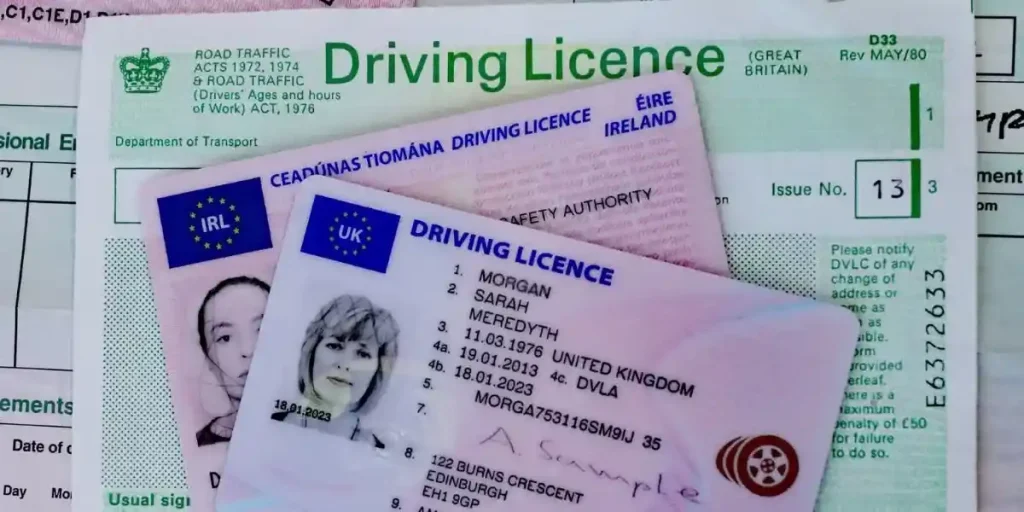
Officially, the document is referred to as a “driving licence.” However, in common parlance, it is often called a “pink licence” due to the colour of the photocard, distinguishing it from the green provisional licence. For car drivers, the most common entitlement is Category B. This category allows you to drive vehicles up to 3,500kg Maximum Authorised Mass (MAM) with up to eight passenger seats.
Sometimes, people refer to it as a “standard licence,” though this is informal. The correct terminology is vital when dealing with insurance companies or legal authorities. A Category B licence is the standard entitlement for cars, but the specific conditions—such as whether it covers manual or automatic transmission—are defined by the codes attached to that category. Understanding these terms prevents confusion when filling out insurance forms or applying for jobs that require driving.
Is An Automatic Licence Considered A Full UK Licence?
Yes, an automatic licence is legally considered a full UK driving licence. It confers the same legal status as a manual licence regarding the ability to drive unsupervised and the validity of the document. However, the key difference lies in the restriction placed upon it.
If you pass your driving test in an automatic vehicle, your licence will be endorsed with the code “78” or be listed as Category B Auto. This means your full entitlement is limited to vehicles with automatic transmission. While the licence is “full” in status, the scope of the vehicles you can legally drive is narrower than that of a manual licence holder. It is a common misconception that an automatic licence is a “half” licence; it is a full licence with a specific transmission restriction.
Can I Drive A Manual Car With An Automatic Licence In The UK?
The short answer is no. If your licence is restricted to automatic transmission, you are legally prohibited from driving a manual car. The restriction is there because the skills required to operate a manual gearbox—specifically clutch control and gear selection—were not assessed during your driving test.
Driving a manual car on an automatic-only licence is not just a technical breach; it is a serious legal offence. If caught, you could face a fine, penalty points on your licence, and potentially a driving ban. More critically, your car insurance would be invalid. Most insurance policies require you to hold the correct licence for the vehicle you are driving. If you are involved in an accident while driving a manual car on an automatic licence, your insurer will likely refuse to pay out, leaving you personally liable for all costs and damages.
To remove this restriction and drive a manual car, you must pass a practical driving test in a manual vehicle. You do not need to retake the theory test, nor do you need to reapply for a provisional licence. Once you pass the manual test, the DVLA will update your licence to remove the automatic restriction, granting you full Category B entitlement for both manual and automatic vehicles.
Comparison: Automatic vs. Manual Licence
The table below highlights the key differences between holding a full manual licence versus a full automatic licence. This comparison clarifies what you are legally permitted to drive with each entitlement.
| Feature | Full Manual Licence (Cat B) | Full Automatic Licence (Cat B Auto) |
|---|---|---|
| Vehicle Transmission | Can drive both manual and automatic cars. | Restricted to automatic cars only. |
| Legal Status | Full entitlement. | Full entitlement (with restriction). |
| Insurance Validity | Valid for both transmission types. | Invalid if driving a manual car. |
| Upgrade Path | No upgrade needed. | Requires a manual practical test to upgrade. |
Get Your Full UK Licence the Expert Way
Thousands of drivers have upgraded from automatic to full Category B entitlement through our trusted network. Join them and drive any car, legally and confidently.
How Can You Tell If A Driving Licence Is Automatic Only?
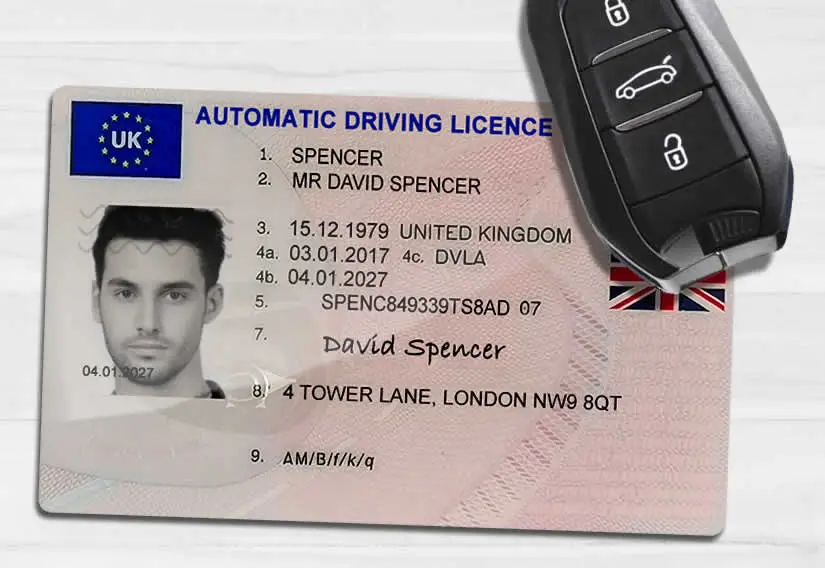
Identifying whether a licence is automatic only is straightforward if you know where to look. The primary indicator is on the back of the photocard licence, in the table listing driving entitlements.
Under the column labelled “Valid from” to “Valid to,” look for the category B. If you see the code “78” in the restrictions column next to Category B, this indicates the licence is restricted to vehicles with automatic transmission. Additionally, the vehicle category itself might be listed as “B Auto” on some older licences or corresponding documentation.
The front of the photocard does not explicitly state “automatic only” in the main text. It simply lists the categories. Therefore, checking the back of the card is the only reliable way to determine transmission restrictions. If you are unsure, you can also check your driving licence information online via the official DVLA “View Driving Licence” service, which clearly outlines your entitlements and any restrictions.
Branching Quiz: Which Licence Do You Have?
Answer the following questions to find out exactly what you can drive.
Question 1: Did you take your practical driving test in a car with an automatic transmission?
- A) Yes -> Go to Result A.
- B) No -> Go to Result B.
Result A: You hold a Category B Auto licence. You are legally restricted to driving automatic vehicles only. If you wish to drive a manual car, you must take an additional practical test.
Result B: You hold a full Category B licence. You are entitled to drive both manual and automatic vehicles.
Understanding Licence Codes
Your driving licence contains various codes that dictate specific conditions or restrictions. Understanding these codes is essential to ensure you are driving legally. The table below explains some of the most common codes you might encounter.
| Code | Meaning | Description |
|---|---|---|
| 01 | Eyesight Correction | You must wear glasses or contact lenses when driving. |
| 78 | Automatic Transmission | Restricted to vehicles with automatic transmission. |
| 102 | Drawbar Trailers | Restricted to trailers with a drawbar coupling. |
| 115 | Organ Donor | Indicates the holder is an organ donor (not a driving restriction). |
What Can I Drive With A Full UK Car Licence?
A standard full UK car licence (Category B) allows you to drive vehicles with a Maximum Authorised Mass (MAM) of up to 3,500kg. This covers the vast majority of standard passenger cars on the road. It also permits you to tow a trailer, provided the combined MAM of the vehicle and trailer does not exceed 3,500kg.
Vehicle Category Limits
Understanding the weight limits is crucial, especially if you plan to drive a van or tow a caravan. The table below outlines the standard limits for a Category B licence.
| Vehicle Type | Maximum Authorised Mass (MAM) | Passenger Limit |
|---|---|---|
| Cars & Light Vans | 3,500 kg | Up to 8 passengers |
| Trailers | 750 kg (unbraked) | N/A |
| Vehicle + Trailer | 3,500 kg (Combined) | N/A |
Selling Point
If you are looking to expand your driving entitlements, whether moving from automatic to manual or learning to tow, consider professional training. Our trusted instructor network can help you upgrade your driving qualifications quickly and legally, ensuring you have the confidence and skills to handle new vehicle types.
What Is The Biggest Vehicle You Can Drive On A Standard UK Licence?
On a standard Category B licence, the largest vehicle you can drive is one with a MAM of 3,500kg. This is a critical threshold. Many larger vans, such as the Ford Transit or Mercedes Sprinter, have gross vehicle weights that exceed this limit when fully loaded.
If you drive a vehicle over 3,500kg on a standard car licence, you are breaking the law. The penalties for driving a vehicle without the correct licence category can be severe, including fines and penalty points. If you need to drive larger vehicles, you must apply for provisional entitlement for the higher category (such as C1 for vehicles up to 7,500kg) and pass a further test.
Download the Complete UK Licence Codes Guide
From code 78 to Category B weight limits, our free reference guide covers every restriction, category, and entitlement printed on your photocard.
What Are Driving Licence Codes And Categories?
Understanding the difference between categories and codes is essential for interpreting your licence correctly.
Categories are the letters and numbers that define the type of vehicle you are allowed to drive. For example, Category A relates to motorcycles, and Category B relates to cars. These categories define the broad class of vehicle.
Codes, on the other hand, are numbers that indicate specific restrictions or conditions attached to that entitlement. For instance, code 01 relates to eyesight correction (you must wear glasses or contact lenses), and code 78, as mentioned earlier, restricts the vehicle to automatic transmission. These codes ensure that any specific limitations on your ability to drive are legally recorded and enforceable.
Category B If You Passed Your Test Before Recent Changes?
Driving licence entitlements have evolved over the years, particularly regarding towing and vehicle weights. If you passed your driving test before 1 January 1997, you may have “grandfather rights.” These drivers usually have entitlement to drive vehicle and trailer combinations up to 8,250kg MAM, and also to drive a minibus with a trailer over 750kg MAM.
For those who passed their test after 1 January 1997, the rules are stricter. The automatic right to tow heavier trailers was removed, and drivers are limited to the 3,500kg limit unless they pass an additional test (Category B+E). Understanding these historical differences is vital, as many drivers are unaware that their entitlement differs from newer drivers.
The Photocard Driving Licence Explained
The modern UK photocard licence is a secure, credit-card-sized document designed to be tamper-proof. The front of the card displays your photograph, expiry date, and the vehicle categories you are entitled to drive. It also shows your name and address.
The back of the card is where the detailed information resides. It features a table with three main columns: the vehicle category, the valid from date, and the valid to date. There is also a column for “Information/Restrictions,” which is where codes like 78 (automatic) or 01 (eyesight) are listed.
It is important to note that the photocard must be renewed every ten years to ensure the photograph remains current. However, the entitlement to drive does not expire at this point (unless you reach age 70, at which point you must renew every three years). Failing to renew the photocard when the photo expires is an offence, even if your driving entitlement is still valid.
Difference Between A Full Driving Licence And A Provisional Driving Licence?
The differences between a provisional and a full licence are stark. A provisional licence (green card) is strictly for learning. It allows you to drive only when supervised by a qualified driver over the age of 21 who has held a full licence for at least three years. You must display ‘L’ plates on the front and rear of the vehicle.
With a provisional licence, you are not permitted to drive on motorways unless you are with an approved driving instructor in a dual-control car. You also cannot carry passengers on a motorcycle if you hold a provisional motorcycle licence. In contrast, a full licence (pink card) removes all these restrictions. You can drive alone, on motorways, and carry passengers. The transition from provisional to full marks the transition from a learner to a fully qualified driver.
Does Your Licence Number Change From Provisional To Full?
Generally, your driver number remains the same when you upgrade from a provisional to a full licence. The driver number is a unique identifier assigned to you when you first apply for a provisional licence. It consists of the first five letters of your surname, your date of birth encoded, and other initials.
The DVLA keeps this number consistent throughout your driving life. This means that when you pass your test, the DVLA simply updates the status on your existing record rather than issuing a new number. However, if you change your name or address, the details on the licence will be updated, but the driver number typically stays the same. If you are ever unsure about your status, you can verify it using the DVLA’s online service.
Light Vehicles And Quad Bikes Under A Full UK Licence?
A full Category B licence allows you to drive light quad bikes (Category L6e) and quadricycles (Category L7e) on public roads. However, the rules vary depending on the weight and power of the vehicle.
For standard quad bikes, if the vehicle is road-legal (type approved), taxed, and insured, a Category B licence is sufficient. However, many off-road quad bikes are not type-approved for road use and cannot be driven on the highway under any licence. If you wish to drive a quad bike on the road, you must ensure it meets construction and lighting regulations. It is also a legal requirement to wear a helmet when riding a quad bike on the road in the UK.
Frequently Asked Questions About Full UK Driving Licence Meaning
What Does Full UK Driving Licence Meaning Refer To After Passing The Driving Test?
After passing the driving test, the term “full UK driving licence” refers to the legal status granted by the DVLA that permits you to drive specific categories of vehicles without supervision. It means you have successfully demonstrated the competence to drive safely and are no longer a learner. It allows you to drive on all public roads, including motorways, and to carry passengers, subject to the vehicle categories listed on your licence.
What Can I Drive With A Full UK Car Licence Under Category B Rules?
Under Category B rules, you can drive vehicles up to 3,500kg MAM with up to eight passenger seats. You can also tow a trailer up to 750kg MAM, or a heavier trailer provided the total weight of the vehicle and trailer does not exceed 3,500kg. Additionally, you can drive motor tricycles with a power output over 15kW if you are over 21. This covers most standard cars, small vans, and pickups.
