

Driving Licence Codes: Meaning Of 79 3, 122 And 118 Rules
In 10 years of advising UK drivers, I have seen hundreds of people receive £1000 fines and 6 penalty points simply because they did not understand a single code on their driving licence. This guide explains every common code, exactly what they mean, and how to avoid costly mistakes.

Key Takeaways
- Driving licence codes are legal restrictions that override the categories on your licence
- You can check your full driving record for free using the DVLA check code service
- Code 79 3 is the most commonly misunderstood restriction for motorcycle riders
- Code 78 restricts you to automatic vehicles only and requires an additional test to remove
- Breaking any code on your licence can result in a £1000 fine and 6 penalty points
- Codes can be added or removed based on changes to your health or driving entitlements
- You should check your driving record at least once a year to ensure it is accurate
- Incorrect codes on your licence can invalidate your insurance
Table of Contents
Driving Licence Codes
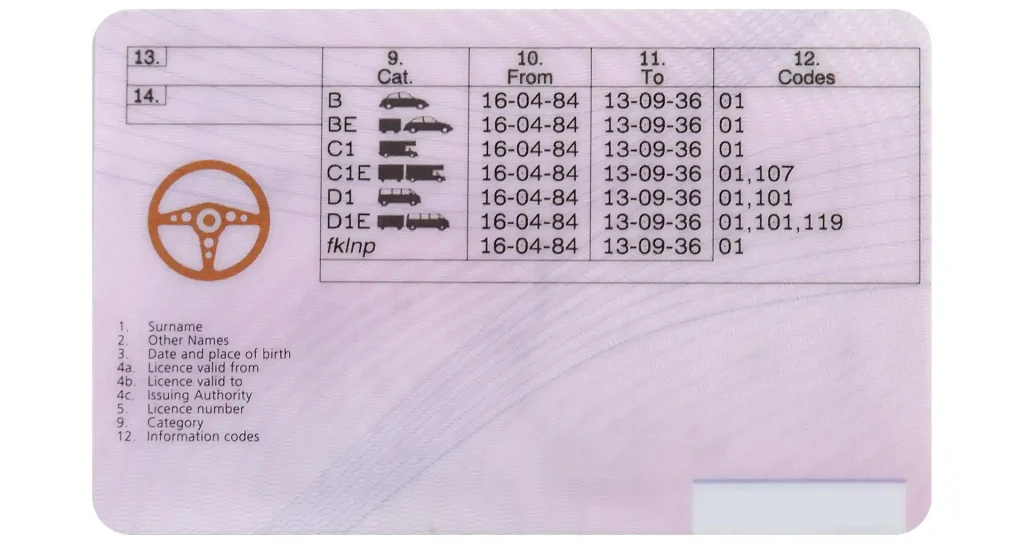
Driving licence codes are numerical codes printed on the back of your UK photocard licence that define legal restrictions and conditions on your driving entitlement. They are separate from driving licence categories, which define the types of vehicle you are allowed to drive.
Every code on your licence is a legal requirement. If you drive in a way that violates any code, you are committing an offence. This can result in penalty points, fines, and in serious cases, a driving ban. It can also invalidate your insurance, meaning you would be personally liable for any costs if you are involved in an accident.
Codes cover a wide range of restrictions, from eyesight requirements to vehicle type limitations. They are added by the DVLA based on your test results, medical conditions, or any endorsements you have received.
| Code | Meaning | Maximum Penalty For Breach |
|---|---|---|
| 01 | Must wear glasses or contact lenses while driving | £1000 fine, 3 penalty points |
| 78 | Restricted to automatic vehicles only | £1000 fine, 6 penalty points |
| 79 3 | Restricted to motorcycles with a power output not exceeding 35kW | £1000 fine, 6 penalty points |
| 101 | Not for hire or reward | £1000 fine, 6 penalty points |
| 118 | Limited to vehicles with a maximum authorised mass not exceeding 3500kg | £1000 fine, 6 penalty points |
| 122 | Valid on successful completion of a theory test | No penalty |
Table 1: Most common driving licence restriction codes and penalties
DVLA spokesperson or road safety expert on the importance of understanding driving licence codes
What Does Your Driving Licence Code Mean? Quiz
Answer these three simple questions to find out what your code means:
Does your code start with 0?
- Yes: It is a medical or eyesight restriction
- No: Go to question 2
Does your code start with 7?
- Yes: It is a vehicle type or transmission restriction
- No: Go to question 3
Does your code start with 1?
- Yes: It is an entitlement or use restriction
- No: It is a less common restriction, check the full list on GOV.UK
How Do You Use A DVLA Check Code For Driving Licence Codes Verification?
A DVLA check code is a temporary 8 character code that allows someone else to view your driving record online. It is separate from the permanent codes printed on your licence.
You can generate a check code for free through the GOV.UK website. Each code is valid for 21 days and can only be used once. You can generate up to 5 codes at any one time.
Employers, hire companies, and insurance providers use check codes to verify your driving entitlements, penalty points, and any restrictions. They cannot access your driving record without a check code.
It is important to note that a check code shows your full driving record, including any penalty points or endorsements that may not be visible on your photocard licence. This is why it is the most accurate way to verify your entitlements.
Hire companies almost always check for codes 78, 101 and 79 3 before allowing you to hire a vehicle. If you have any of these codes, you may be refused hire even if you hold the correct category entitlement.
You can use our step by step DVLA check guide to generate your code and verify your driving record quickly and accurately, avoiding common mistakes that can delay verification.
Could A Single Code Be Costing You £1,000?
Thousands of UK drivers unknowingly break licence codes every year. Find out in minutes whether your current driving is putting you at risk of a fine and 6 penalty points.
How Do You Check My Driving Licence Points And Status Online?
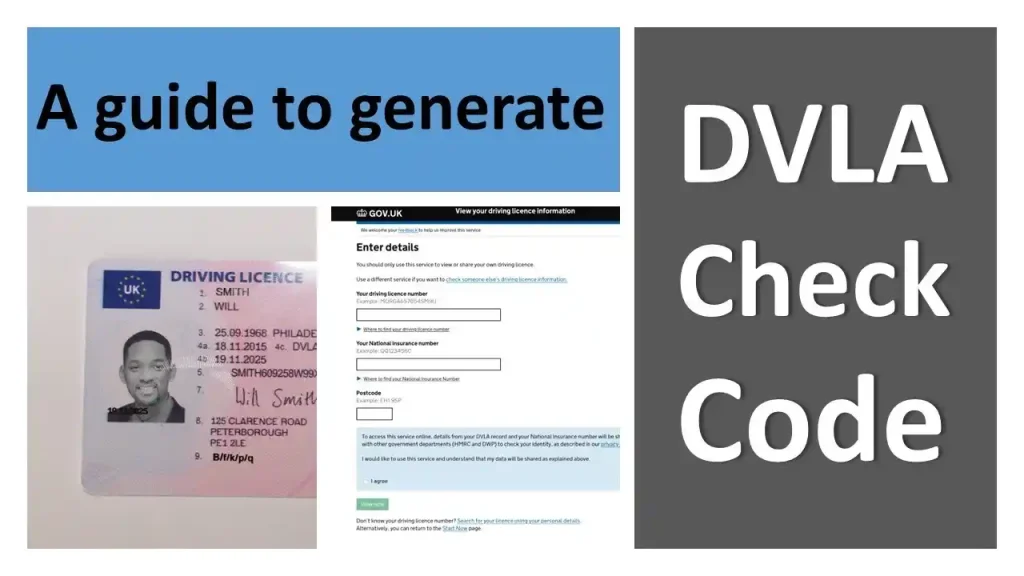
You can check your penalty points and driving status for free through the GOV.UK view driving licence service. You will need your driving licence number, national insurance number, and postcode.
This service shows you all penalty points currently on your licence, when they were added, and when they will expire. It also shows you all of your entitlements and restriction codes, including any that are not printed on your physical licence.
| Offence Type | How long points remain on your record |
|---|---|
| Most motoring offences | 4 years |
| Drink or drug driving | 11 years |
| Dangerous driving | 11 years |
Table 2: How long penalty points remain on your driving record
What Does Driving Licence Code 79 3 Mean?
Code 79 3 is the most commonly misunderstood code on UK driving licences. For motorcycle riders, it restricts you to riding motorcycles with a maximum power output of 35kW and a power to weight ratio not exceeding 0.2kW per kg. It can also be applied to car licences for drivers with certain medical conditions, restricting them to vehicles with an automatic transmission.
This code is most commonly added to the licence of riders who pass their motorcycle test on an A2 category motorcycle. It means you cannot ride a full power Category A motorcycle until you complete the additional test required for full Category A entitlement.
Many riders mistakenly believe that holding Category A on their licence means they can ride any motorcycle. This is not true if code 79 3 is also present. The code overrides the category, and riding a more powerful motorcycle is an offence that carries 6 penalty points and a fine of up to £1000.
Code 79 3 is not a temporary restriction. It will remain on your licence permanently unless you complete the full Category A motorcycle test.
What Does Code 122 Mean On Driving Licence?
Code 122 indicates that you have successfully completed the theory test requirement for a particular category of vehicle. It is most commonly seen on provisional driving licences, but can also appear on full licences.
This code is added automatically by the DVLA when you pass your theory test. It confirms that you have met the minimum knowledge requirement for that category.
Code 122 does not give you any additional entitlement to drive. It is simply a confirmation that you have completed one of the requirements for a full licence. It will remain on your licence permanently, but once you have passed your practical test it has no practical effect on your entitlements.
Verified By 10 Years Of UK Driving Licence Expertise
Our specialists have helped hundreds of drivers decode their DVLA records and avoid costly mistakes. Get accurate, expert guidance on exactly what your licence allows you to do.
What Does Driving Licence Code 118 Allow You To Do?
Code 118 restricts you to driving vehicles with a maximum authorised mass not exceeding 3500kg. It is most commonly added to the licence of drivers who have certain medical conditions that affect their ability to drive heavier vehicles.
This code can apply to any category of vehicle, including cars, vans, and minibuses. If you have code 118 on your licence, you cannot drive any vehicle over 3500kg, even if you hold the appropriate category entitlement.
Code 118 can be reviewed and removed if your medical condition improves. You will need to inform the DVLA and provide medical evidence from a registered doctor to support your application.
What Does 101 Code On Driving Licence Restrict?
Code 101 restricts you from driving any vehicle for hire or reward. This means you cannot be paid to drive, or drive a vehicle that is being used to carry passengers or goods for payment.
This is one of the most common codes on UK driving licences. It is added automatically to most standard Category B licences.
Hire and reward includes driving for Uber, delivery driving, or any other form of paid driving work. If you want to drive for hire or reward, you will need to apply for a separate licence such as a taxi licence or LGV licence.
Many drivers are unaware of this code and accidentally break the law by doing casual delivery work. This can result in 6 penalty points and a fine of up to £1000.
What Does Code 78 On Driving Licence Mean For Automatic Drivers?
Code 78 restricts you to driving automatic vehicles only. It is added to your licence if you pass your driving test in an automatic vehicle.
If you have code 78 on your licence, it is illegal for you to drive a manual vehicle at any time, even if you are insured to drive it. This is one of the most commonly broken driving laws in the UK.
You can remove code 78 from your licence by passing a driving test in a manual vehicle. There is no shortcut or alternative way to remove this restriction.
| Test Pass Date | Automatic Test Entitlement |
|---|---|
| Before 1 April 2014 | Can drive manual and automatic vehicles |
| After 1 April 2014 | Restricted to automatic vehicles only (code 78) |
Table 3: Code 78 entitlement by test pass date
It is important to note that if you passed your driving test before 1 April 2014, you may have automatic entitlement to drive manual vehicles even if you passed in an automatic. This is one of the most common areas of confusion, and you should check your driving record to confirm your entitlement.
Download Your Free Driving Licence Codes Checklist
Use our free driving licence codes interpretation checklist to confirm your entitlements before hiring or upgrading vehicles — and never get caught out by a hidden restriction again.
What Does 01 Mean On Driving Licence For Eyesight Requirements?
Code 01 means you are legally required to wear glasses or contact lenses while driving. It is added to your licence if you fail the eyesight test during your driving test, or if you declare a vision condition to the DVLA.
You must wear your glasses or contact lenses at all times while driving, even for short journeys. If you are stopped by the police and cannot produce your glasses or contact lenses, you can be fined £1000 and given 3 penalty points.
If your vision improves and you no longer need glasses or contact lenses, you can apply to have code 01 removed from your licence. You will need to pass an eyesight test with an optician and provide the results to the DVLA.
What Is Category B On Driving Licence?
Category B is the standard car driving licence that most UK drivers hold. It allows you to drive vehicles with a maximum authorised mass of up to 3500kg and up to 8 passenger seats.
If you passed your driving test before 1 January 1997, you have additional entitlements under Category B, including the ability to tow a trailer up to 7500kg combined weight. If you passed after this date, your towing entitlements are more restricted.
Category B also allows you to drive motor tricycles with a power output over 15kW, provided you are over 21 years old.
What Is Category BE On Driving Licence For Trailer Entitlement?
Category BE allows you to tow a trailer with a maximum authorised mass of up to 3500kg, provided the combined weight of the vehicle and trailer does not exceed 7000kg.
If you passed your driving test before 1 January 1997, you automatically hold Category BE entitlement. If you passed after this date, you will need to pass an additional test to get Category BE.
In 2021, the rules for towing were changed. You can now tow a trailer up to 3500kg on a standard Category B licence without needing Category BE. However, there are additional training requirements that you must complete.
What Is A On Driving Licence For Motorcycle Riders?
Category A is the full motorcycle licence that allows you to ride any motorcycle of any engine size or power output.
There are three stages of motorcycle entitlement in the UK: A1, A2, and A. You can progress through these stages through a system called progressive access.
- A1 allows you to ride motorcycles up to 125cc and 11kW
- A2 allows you to ride motorcycles up to 35kW
- A allows you to ride any motorcycle
If you pass your A2 test, you will have code 79 3 added to your licence. You can upgrade to full Category A after two years by passing an additional test.
What Is C1 Licence And When Is It Required?
Category C1 allows you to drive medium sized vehicles with a maximum authorised mass between 3500kg and 7500kg. This includes most small lorries and vans over 3.5 tonnes.
You need a C1 licence if you want to drive a vehicle over 3500kg for personal or commercial use. If you passed your driving test before 1 January 1997, you automatically hold C1 entitlement. If you passed after this date, you will need to pass an additional test.
C1 licence holders are subject to stricter medical requirements than standard car drivers. You will need to complete a medical examination every 5 years until you are 65, and every year after that.
You can download our free driving licence codes interpretation checklist to help you confirm your entitlements before hiring or upgrading vehicles.
What Is Driving Licence Number And How Is It Structured?
Your driving licence number is a 16 character unique identifier that is linked to your personal driving record. It is structured in a very specific way that encodes personal information about you.
The first 5 characters are the first 5 letters of your surname. The next 6 characters are your date of birth in a specific format. The next 2 characters are the first and middle initials of your first name. The final 3 characters are a unique identifier.
Your driving licence number is sensitive personal information. You should never share it with anyone you do not trust, as it can be used for identity fraud.
What Are The New Driving Licence Rules Affecting Driving Licence Codes?
In recent years, there have been several changes to UK driving licence rules that have affected codes and entitlements.
The most significant change was in 2021, when the rules for towing with a car licence were updated. This change allowed most drivers to tow a trailer up to 3500kg without needing Category BE entitlement.
In 2024, new rules were introduced that require all new drivers to complete a mandatory training course before they can tow a trailer. This course does not require a test, but it is a legal requirement.
The DVLA also regularly updates the list of driving licence codes and restrictions. You should check your driving record at least once a year to ensure it is accurate and up to date.
Frequently Asked Questions About Driving Licence Codes
How Do Driving Licence Codes Affect What Vehicles You Can Legally Drive In The UK?
Driving licence codes are legal restrictions that override the categories on your licence. Even if you hold a particular category entitlement, any code on your licence can restrict or modify that entitlement. For example, you may hold Category A for motorcycles, but if you also have code 79 3, you cannot ride a full power motorcycle.
What Are Driving Licence Categories And How Do They Differ From Driving Licence Codes?
Driving licence categories define the types of vehicle you are allowed to drive. For example, Category B is cars, Category A is motorcycles, and Category C is lorries.
Driving licence codes define restrictions or conditions that apply to those categories. They modify or limit the entitlement granted by the category.
