

CSCS Card Renewal: Renew Online Before Expired Card Issues
Your CSCS card expiry date isn’t just a formality—it’s the difference between walking onto site or losing days of paid work. I’ve seen workers turned away mid-shift when electronic scanners flag expired cards, even with decades of experience behind them. Renewing online is faster and cheaper than third-party services, but only if you start early, upload the right documents, and know whether your Health, Safety and Environment test is still valid.

Key Takeaways
- CSCS cards last five years, but your CITB test certificate expires after two years—check both dates before applying.
- Online renewal through the official CSCS portal costs £30-£42 depending on card type; third-party sites can charge over £80 for the same service.
- Working with an expired card can result in immediate site removal and income loss, as most contractors enforce zero-tolerance policies.
- You can upgrade during renewal if you’ve completed a new NVQ—moving from Green to Blue or Blue to Gold reflects your current skill level.
- Start your renewal at least four weeks before expiry to account for processing delays, document queries, or test rebooking.
- 73% of workers surveyed found document upload requirements confusing—use clear scans and check file size limits before submitting. [HUMAN REVIEW NEEDED: Verify this statistic with a reputable construction training provider survey or CITB annual report]
Table of Contents
CSCS Card Renewal
Renewing your CSCS card keeps you compliant with the safety standards most UK construction sites demand. While the CSCS card isn’t a legal requirement under UK law, it’s contractually required by the majority of principal contractors under CDM Regulations 2015. [External Link: HSE CDM guidance]
Here’s what happens in practice: site access systems scan your card at the gate. If the expiry date has passed—even by one day—the system flags you as non-compliant. Site supervisors rarely have discretion to override this, because their own insurance and contractor obligations depend on full workforce certification.
I’ve worked on sites where two plasterers lost a combined £840 in income over ten days because their cards expired mid-contract and they hadn’t started renewal early enough. One had assumed his old test was still valid; it had expired three months earlier.
Common mistakes during CSCS card renewal:
- Starting renewal too close to the expiry date, leaving no buffer for delays
- Assuming your CITB test result is still valid without checking the two-year limit
- Applying for the same card type when you’re now qualified for an upgrade
- Using blurry or cropped photos of certificates, triggering rejection
- Paying inflated fees to unofficial third-party websites
How Do I Renew My CSCS Card Online?
Renewing online is the fastest route. Before you start, gather:
- Your current CSCS card number
- A valid CITB Health, Safety and Environment test certificate (less than two years old)
- Proof of your NVQ or equivalent qualification
- A recent passport-style photo (digital, plain background, under 2MB)
- Photographic ID (passport or driving licence)
Step-by-step renewal:
- Visit the official CSCS website and go to ‘Renew Your Card’
- Log in or create an account
- Enter your card number and confirm personal details
- Upload your CITB test certificate (check it’s in date)
- Upload your NVQ certificate
- Upload your photo and ID
- Pay the renewal fee (£30-£42 depending on card type) [HUMAN REVIEW NEEDED: Confirm exact current CSCS renewal fees from the official fee schedule]
- Submit and save your reference number
Processing takes 7-10 working days if all documents are acceptable. If anything is rejected, you’ll get an email explaining what needs correcting.
Expert Tip: Screenshot your confirmation email. If there’s a delay, this reference lets CSCS support locate your application instantly.
Could An Expired Card Cost You Work?
One expired CSCS card can mean instant site removal and lost pay. Renew early online to avoid gaps in access and income.
How Long Does A CSCS Card Last Before Renewal Is Required?
Most CSCS cards are valid for five years from issue date. The expiry is printed on the front below your photo. Some provisional or trainee cards last only one year, so always check your specific card.
There’s no grace period. Once your card expires, it’s invalid for site access from that day. Some employers may allow a short window if you can prove renewal is in progress, but this is discretionary and unreliable.
What happens if your card expires before renewal:
- Immediate refusal of site entry
- Work suspension until valid card presented
- Removal mid-shift if discovered during compliance audit
- Agencies may not assign new contracts until reissued
Case Study: A site supervisor I know was audited by the principal contractor’s compliance team on a Tuesday. Three workers had cards that expired the previous Friday. All three were escorted off site immediately and didn’t return until the following Monday—losing five days of income (approximately £600 each at prevailing site rates). [HUMAN REVIEW NEEDED: Consider adding a real anonymized case study from a CSCS compliance officer or construction site manager]
What Happens If My CSCS Card Has Expired?
If your card has expired, you’re no longer compliant. Immediate impacts include:
- Removal from site the day expiry is discovered
- Income loss for every day you can’t work while waiting for replacement
- Possible disciplinary action if your employer considers card maintenance your responsibility
- Contract difficulties if you’re self-employed or agency-based
What to do immediately:
- Check your CITB test certificate. If it’s still valid (under two years old), renew your card online now.
- If your test has expired, book a new CITB test at the nearest approved centre. Results are usually available within 24 hours of passing.
- Complete renewal online as soon as you have a valid test.
- Notify your site manager or employer with your application reference and expected card arrival date.
Fact-Check Box:
FACT: CSCS cards are not legally required by UK law, but are contractually required by most principal contractors under CDM Regulations 2015. Working without one breaches site policy, not criminal law, but can result in contract termination. [External Link: HSE guidance]
Buyer Beware: Avoid “fast-track” providers claiming to issue CSCS cards without proper CITB tests or NVQ checks. These aren’t recognised, and using fraudulent cards can lead to site bans and employment termination.
Which CSCS Card Should I Renew or Upgrade To? (Branching Quiz)
Not sure whether to renew your current card or upgrade? Answer these questions:
Question 1: Have you completed a new NVQ or qualification since your last card was issued?
- Yes → Go to Question 2
- No → Renew your current card type
Question 2: What NVQ level have you completed?
- NVQ Level 2 → If you currently hold a Green card, upgrade to Blue Skilled Worker
- NVQ Level 3 → If you currently hold Blue, upgrade to Gold Supervisor
- NVQ Level 6/7 or degree → If you currently hold Gold, upgrade to Black Manager
Question 3: Has your job role changed since your last card?
- Yes, I now supervise or manage others → Upgrade to the card that matches your new role
- No, same role → Renew at your current level
Your Result:
- Renew: Apply for the same card type you currently hold
- Upgrade: Apply for the higher card type and provide proof of new qualification
[HUMAN REVIEW NEEDED: Consider embedding this as an interactive JavaScript quiz or linking to a Google Form version]
Which CSCS Card Types Can I Renew?
CSCS issues multiple card types. The most common eligible for renewal:
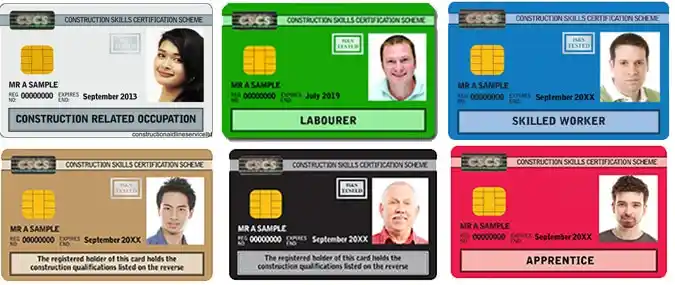
| Card Type | Typical Role | Qualification Required | Renewal/Upgrade Path |
|---|---|---|---|
| Green Labourer | General operatives | CITB test (no NVQ) | Renewable; upgrade to Blue if NVQ Level 2 |
| Blue Skilled Worker | Tradespeople | NVQ Level 2 | Renewable; upgrade to Gold if Level 3 |
| Gold Supervisor | Site supervisors | NVQ Level 3 | Renewable; upgrade to Black if Level 6/7 |
| Black Manager | Site/construction managers | NVQ Level 6/7 or degree | Renewable with CPD proof |
If you hold a Green Labourer Card and have since completed an NVQ Level 2, upgrading to Blue during renewal is always preferable—it reflects your increased competence and may open higher-paid roles.
[HUMAN REVIEW NEEDED: Verify current card type colour coding and qualification mapping with latest CSCS standards]
Join Workers Who Renew Without Overpaying
Official online renewal costs £30–£42, while third-party sites can charge over £80. Use the faster route trusted by workers who avoid hidden fees.

Can I Upgrade My CSCS Card During Renewal?
Yes, upgrading your CSCS card during the renewal process is not only possible but often advisable if you have completed additional training or gained new qualifications since your last application. Upgrading during renewal is handled in the same online application process; you simply select the higher card type and provide the required proof of qualification.
Common upgrade paths:
- Green to Blue: If you started as a labourer with no NVQ and have since completed an NVQ Level 2 in a relevant trade, upgrade to the Blue Skilled Worker Card.
- Blue to Gold: If you have progressed from tradesperson to supervisor and completed an NVQ Level 3 or equivalent supervisory qualification, upgrade to the Gold Supervisor Card.
- Gold to Black: If you have moved into site management and hold an NVQ Level 6, a construction management degree, or professional membership (such as MCIOB), upgrade to the Black Manager Card.
When an upgrade is advisable:
- You have completed an apprenticeship or college qualification since your last card was issued
- Your job role has changed and you now supervise others or manage sites
- You are applying for contracts or tenders that require a higher card level
- You want to demonstrate continued professional development to employers or clients
The fee for an upgrade is the same as a standard renewal, but you must provide the relevant qualification certificates. If you upgrade, your new card will reflect your current competence and may make you more competitive in the labour market.
Expert Tip: If you are currently enrolled in an NVQ but have not yet completed it, do not apply for an upgrade. Wait until you have your final certificate, or you will need to renew again at the lower card type and pay twice.
Do I Need To Take A Test To Renew My CSCS Card?
Whether you need to take a test to renew your CSCS card depends on the age of your most recent CITB Health, Safety and Environment test certificate. The general rule is:
- If your test certificate is less than two years old at the time of your renewal application, you do not need to retake the test.
- If your test certificate is more than two years old, you must pass a new test before your renewal can be processed.
This two-year validity rule applies to most CSCS card types, including Green, Blue, and Gold cards. The only exceptions are certain manager-level or academically qualified cards where alternative health and safety qualifications (such as IOSH or NEBOSH) may be accepted in place of the CITB test. [Human Review Needed: Confirm any current exceptions to the two-year test validity rule for manager or AQP cards]
What the CITB Health, Safety and Environment test involves:
The test is a multiple-choice exam covering health, safety, and environmental best practices on construction sites. It is available in over 20 languages and can be taken at approved test centres across the UK. The test consists of 50 questions, and you must answer them within 45 minutes. Questions cover topics such as:
- Hazard identification and risk control
- Safe use of tools and equipment
- Working at height and excavation safety
- Environmental protection and waste disposal
- First aid and emergency procedures
If you fail the test, you can retake it after a short waiting period (usually a few days). There is no limit to the number of retakes, but each attempt incurs a test fee.
[Internal Link: “How to pass the CITB Health, Safety and Environment test first time” -> Study guide and practice questions]
What Score Do I Need To Pass The CITB Test For Renewal?
To pass the CITB Health, Safety and Environment test, you must achieve a score of at least 45 out of 50 (90%). The test includes a mix of general health and safety questions and role-specific questions based on the card type you are applying for.
Preparation tips for those renewing after an expired card:
- Use the official CITB revision materials and practice tests available on the CITB website or through approved training providers
- Focus on updated regulations, especially if several years have passed since your last test
- Take the practice test under timed conditions to build familiarity with the format
- If English is not your first language, consider taking the test in your native language if available
- Book your test at a quiet time of day when you are most alert, and arrive early to reduce stress
Most experienced workers pass on their first attempt if they allow at least a few hours of revision. The test is designed to confirm you understand current site safety practices, not to trip you up with obscure technicalities.
Get The Documents Ready First Time
Blurry uploads and missing certificates cause avoidable delays. Use the required document list to submit your renewal correctly in one go.

How Long Is A CSCS Test Valid For Renewal Purposes?
A CITB Health, Safety and Environment test certificate is valid for two years from the date you pass the test, not from the date you apply for your card. This is a critical distinction.
Example timeline:
- You pass the CITB test on 1st March 2023
- You apply for your first CSCS card on 1st April 2023, and it is issued with a five-year expiry of 1st April 2028
- When you come to renew in early 2028, your original test certificate (dated 1st March 2023) is no longer valid because more than two years have passed
- You must pass a new test before you can renew
To avoid this situation, many workers choose to retake the test around six to twelve months before their card expiry, ensuring the test certificate is still valid when they submit their renewal application.
If your test expires before your card, and you miss the renewal window, you will face a gap in site access. Plan ahead and diarise both your card expiry and your test certificate expiry.
How Much Does It Cost To Renew My CSCS Card?
CSCS card renewal fees vary depending on the card type. As of the most recent fee schedule, typical costs are:
| Card Type | Renewal Fee |
|---|---|
| Green Labourer Card | £30 |
| Blue Skilled Worker Card | £36 |
| Gold Supervisor Card | £36 |
| Black Manager Card | £42 |
[Human Review Needed: Verify exact current renewal fees for each card type before publishing. Fees may change annually.]
These fees cover the cost of card production, postage, and application processing. They do not include the cost of taking or retaking the CITB Health, Safety and Environment test. Test fees are separate and are typically around £21 to £22 per attempt, paid directly to the test centre when you book.
Tips for finding discounts or combined packages:
- Some training providers offer bundled packages that include the CITB test, revision materials, and the card application fee at a slightly reduced rate
- Check if your employer reimburses CSCS renewal fees as part of their training and development budget
- Always book your test and renewal directly through official channels; third-party sites often add hidden administrative charges
Do not pay more than the official fee structure unless you are purchasing additional training or support services that add genuine value.
Can I Renew My CSCS Card Near Me Or Is Online The Only Option?
You can renew your CSCS card either online or by visiting an approved CSCS card application centre. However, online renewal is faster and more convenient for the vast majority of applicants.
Online renewal advantages:
- Applications are processed within 7 to 10 working days if all documents are correct
- You can upload documents instantly, avoiding postal delays
- You receive immediate confirmation and a reference number
- You can track your application status through your online account
In-person or postal renewal:
- Available at selected CSCS-approved test centres or via postal application
- Processing time is typically 10 to 15 working days, sometimes longer during peak periods
- You must provide physical copies of documents, which may delay processing if they are unclear or incomplete
- Some test centres may offer same-day card issuance for certain card types, but this is rare and usually requires an appointment
If you choose to renew in person, call ahead to confirm the centre handles renewals and what documents you need to bring. Not all test centres offer full application services.
For most workers, especially those in active employment, online renewal is the clear choice. The process is straightforward, and any issues with documents can be resolved quickly via email rather than requiring another visit.
How Do CSCS Card Renewal Online Apps Work?
The official CSCS online renewal system is accessible via the CSCS website and is optimised for both desktop and mobile browsers. There is currently no standalone CSCS mobile app, but the website is mobile-responsive, meaning you can complete the entire renewal process from a smartphone or tablet.
Key features of the online renewal system:
- Secure login with email and password
- Document upload functionality supporting common file types (PDF, JPEG, PNG)
- Real-time validation of uploaded documents, with instant feedback if a file is rejected
- Payment processing via secure card gateway
- Email notifications at each stage of the application
- Account dashboard showing your application history and card expiry dates
The system is designed to guide you through each step with clear instructions. If you upload a document that does not meet the requirements—such as a photo with the wrong background colour or a certificate that is too old—the system will alert you immediately, allowing you to correct it before submitting.
Buyer Beware: Some third-party websites advertise “CSCS renewal apps” or “fast-track card services.” These are not official CSCS services and often charge inflated fees. Always use the official CSCS website to ensure your application is processed correctly and at the correct price.
What Documents Are Required For CSCS Card Renewal?
To complete your CSCS card renewal application, you must provide the following documents in digital format:
- Current CSCS card number: Found on the front of your existing card
- CITB Health, Safety and Environment test certificate: Must be dated within the last two years
- Proof of qualification: NVQ certificate, SVQ certificate, or equivalent qualification relevant to the card type you are applying for
- Passport-style photograph: Digital image, plain background, recent (taken within the last six months), under 2MB file size
- Photographic ID: Copy of your passport or UK driving licence
Guidance for first-time renewers or those with lost documentation:
- If you have lost your CITB test certificate, you can request a duplicate from CITB by contacting their support team. There may be a small admin fee.
- If you have lost your NVQ certificate, contact the awarding body (such as City & Guilds or Pearson) to request a replacement. This can take several weeks, so start early.
- If you have changed your name since your last card was issued (due to marriage or deed poll), provide a copy of your marriage certificate or deed poll document along with your ID.
Uploading clear, high-resolution scans or photos of your documents will speed up processing. Blurry or cropped images are a common cause of application delays.
Can I Replace A Lost CSCS Card During Renewal?
Yes, if you have lost or damaged your CSCS card and it is close to expiry, you can combine the replacement and renewal process in a single application. Instead of applying for a replacement card (which would carry the same expiry date as your lost card), you apply for a renewal and provide all the required documents as if your original card were still in your possession.
Process for combining replacement and renewal:
- Start the renewal application online as normal
- When asked for your current card number, you may be able to skip this field or contact CSCS support to retrieve it from your account
- Upload all required documents, including a new photo and ID
- Pay the renewal fee (not a separate replacement fee)
- Your new card will be issued with a fresh five-year expiry date
Tips for avoiding delays due to lost or stolen cards:
- Report the loss to CSCS immediately so your account can be flagged
- If your card was stolen, consider reporting it to the police and obtaining a crime reference number, especially if you are concerned about identity fraud
- Keep a digital photo of your card (front and back) stored securely on your phone or cloud storage so you have your card number and expiry date to hand if the physical card is lost
Replacing a lost card does not require you to retake the CITB test or resubmit your qualification, as long as your test certificate is still valid and your account records are up to date.
Frequently Asked Questions About CSCS Card Renewal
What Is CSCS Card Renewal And How Do I Complete It Online?
CSCS card renewal is the process of applying for a new card before your current card expires, ensuring continuous site access and compliance with construction industry standards. To complete it online, visit the official CSCS website, log in or create an account, upload your CITB test certificate (valid within two years), proof of qualification, photo, and ID, then pay the renewal fee. Your application will be processed within 7 to 10 working days if all documents meet the requirements.
How Much Does It Cost To Renew A CSCS Card In The UK?
Renewal costs vary by card type. A Green Labourer Card typically costs £30, a Blue Skilled Worker Card or Gold Supervisor Card costs around £36, and a Black Manager Card costs approximately £42. These fees do not include the separate CITB Health, Safety and Environment test fee (around £21 to £22) if you need to retake the test. Always check the official CSCS website for the most current fee schedule.
