

Category B Driving Licence: Age Requirements And Vehicle Limits
Confusion around driving licence categories can cost you more than just a fine. Many drivers assume their standard car licence covers vans or trailers, only to face penalty points or invalid insurance when stopped by police. Understanding your exact entitlements is critical for legal compliance and safety on UK roads.
This guide explains the Category B Driving Licence rules in detail. You will learn about vehicle weight limits, towing rights, and the crucial differences between licence categories and insurance classifications. We cover everything from 3.5 tonne rules to automatic transmission restrictions.

Key Takeaways
- Category B covers cars and vans up to 3,500 kilograms MAM.
- Towing limits depend on when you passed your driving test.
- Category B insurance write-offs are not road legal vehicles.
- Automatic licences restrict you to automatic transmission cars.
- Pre-1997 licence holders have wider towing and truck rights.
- Driving outside your category voids insurance and breaks the law.
- BE entitlement is required for heavy trailers post-2013.
- Always check your DVLA record for exact entitlements.
- Medical conditions can lead to licence revocation.
- Professional lessons increase pass rates and reduce long-term costs.
Table of Contents
Category B Driving Licence
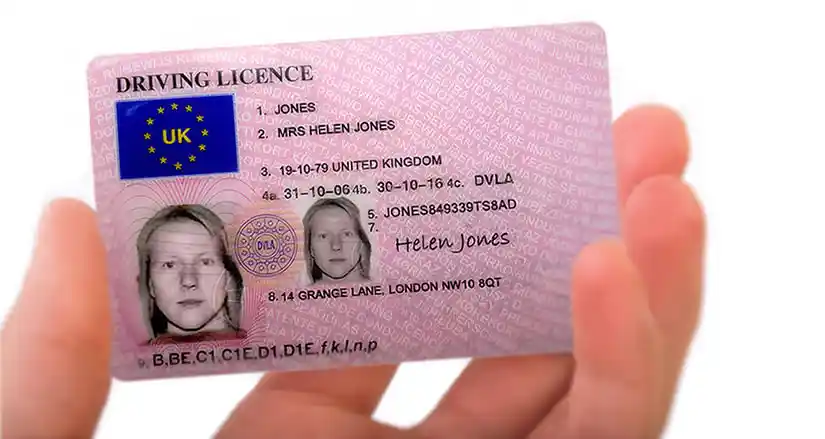
A Category B Driving Licence is the standard car licence held by most UK drivers. It allows you to operate vehicles up to a specific weight limit without needing additional vocational testing. The core purpose is to permit personal transport and light commercial use under strict mass restrictions.
You need this licence if you intend to drive any motor vehicle with four wheels that falls within the standard weight parameters. The standard age requirement is 17 years old, though you can apply for a provisional licence at 15 years and 9 months. However, you cannot drive a car on public roads until you are 17.
The legal framework is governed by the Driver and Vehicle Licensing Agency (DVLA). Entitlements are strictly defined by the Road Traffic Act. Violating these categories is a criminal offence.
Here’s the thing: many people confuse this with other codes. Category B is distinct from Category C (large goods vehicles) or Category D (buses). It is specifically designed for personal cars and light vans.
What Is A Category B Car In The United Kingdom?
It is vital to distinguish between licence categories and insurance write-off categories. A Category B car in insurance terms refers to a vehicle deemed a repairable write-off after an accident. This has nothing to do with your driving licence entitlements.
In the context of accident damage, Category B means the vehicle structure is damaged beyond safe repair, though parts may be salvaged. These vehicles must be crushed and never return to the road.
This definition is separate from driving entitlements. You cannot drive a Category B write-off because it cannot be legally registered for road use.
Warn readers to verify vehicle history before purchase. Always check the DVLA database for write-off status. Buying a Category B write-off for parts is legal, but driving it is not.
Is Your Licence Costing You Points?
Driving outside your category voids insurance and risks penalty points. Find out exactly what your Category B licence permits before your next journey.
What Is A Category B Driving Licence?
A Category B Driving Licence permits you to drive a motor vehicle with a Maximum Authorised Mass (MAM) of up to 3,500 kilograms. It also allows you to tow a trailer under specific conditions.
A Full B Licence means you have passed both theory and practical tests. This differs from a Provisional Permit, which requires supervision by a qualified driver and displays L plates.
Category B stands for the standard passenger vehicle class within the European driving licence category system. It is the baseline entitlement for most adults.
Common misunderstandings exist around the term B Class License. Some believe it covers all vans. It does not. Heavy commercial vehicles require Category C.
How Much Is A Cat B Licence?
The typical cost of applying for a provisional Category B Driving Licence is £34 online. Postal applications cost £43. These fees are set by the DVLA.
Practical test fees vary. The standard weekday test costs £62. Evening or weekend slots cost £75. Theory test charges are currently £23 for cars.
Additional expenses include driving lessons. The average cost per hour is around £30. Medical requirements may apply for older drivers or those with specific conditions.
Driving Instructor on typical lesson counts needed to pass first time.
Book professional driving lessons through our trusted partners to increase first time pass success and save on retest costs. Failing multiple times increases total expenditure significantly.
What Can I Drive With A Category B License?
You can drive cars, small vans, and light commercial vehicles under a Category B Driving Licence. The vehicle must not exceed the maximum weight limit including passengers and cargo.
Light vans are permitted provided the Gross Vehicle Weight (GVW) is under 3,500 kilograms. This includes popular models like the Ford Transit Connect or Vauxhall Combo.
Trailer allowances depend on when you passed your test. Basic towing rights allow a trailer up to 750 kilograms. Heavier trailers require the vehicle and trailer combined weight to stay under 3,500 kilograms.
Vehicle size and design limitations apply. You cannot drive vehicles with more than eight passenger seats. That requires a different category.
| Vehicle Type | Max Weight (MAM) | Max Seats | Trailer Limit |
|---|---|---|---|
| Standard Car | 3,500 kg | 8 | 750 kg |
| Light Van | 3,500 kg | 3 | 750 kg |
| Pickup Truck | 3,500 kg | 5 | 750 kg |
| Minibus | 3,500 kg | 16 | Not Allowed |
Table 1: Standard Category B Entitlements Overview
Pass First Time With Expert Driving Guidance
Professional lessons significantly increase first-time pass rates and reduce costly retest fees averaging £62–£75 per attempt.
Can I Drive A 3.5 Tonne On A Category B Licence?
Yes, you can drive a 3.5 tonne vehicle on a Category B Licence. The 3,500 kilogram Maximum Authorised Mass rule is the upper limit for this category.
The biggest truck you can drive on a car licence in the United Kingdom is one that does not exceed this 3.5 tonne threshold. This includes large Luton vans used for removals.
Age related considerations exist. Drivers over 70 may need to renew their licence more frequently. Medical declarations become mandatory to ensure fitness to drive heavier vans.
Legal consequences of exceeding permitted weight limits are severe. Police can issue fixed penalty notices. Your insurance may be voided in the event of an accident.
What Is The Difference Between B And B1?
Category B1 covers motor tricycles and quadricycles. It is intended for lighter, smaller vehicles than standard cars. This category is often automatically included for car licence holders.
Category B and B1 differ in terms of weight and vehicle structure. B1 vehicles usually have an unladen weight up to 400 kilograms. Category B covers up to 3,500 kilograms.
B1 does not typically cover motorhomes or minibuses unless they fall within the weight and seat restrictions of Category B. Most motorhomes require Category C1 if heavier.
Some drivers have B1 automatically included on their licence. If you passed your car test, you likely hold B1 entitlement without extra testing.
| Feature | Category B | Category B1 |
|---|---|---|
| Vehicle Type | Cars and Vans | Quadricycles |
| Max Weight | 3,500 kg | 400 kg (550 kg goods) |
| Wheels | 4+ | 4 (Quad) or 3 (Trike) |
| Test Required | Car Test | Car Test (Usually) |
Table 2: Comparison Of Category B And B1 Entitlements
What Is Category BE On A Category B Driving Licence?
Category BE entitlement allows you to tow larger trailers. Specifically, it permits a trailer over 750 kilograms where the combined weight exceeds 3,500 kilograms.
The impact of passing the test on or after 19 January 2013 is significant. Drivers passing after this date lost automatic BE rights. You must take a separate towing test.
A separate BE test may be required if you need to tow heavy equipment or large caravans. The test involves reversing maneuvers and safety checks.
Practical scenarios include caravan holidays or transporting heavy machinery. Without BE, you are limited to lighter loads that fit within the standard 3.5 tonne combined limit.
Download the Complete Category B Entitlements Guide
Get the full breakdown of B, B1, and BE towing rights, weight limits, and grandfather rules for pre-1997 and post-2013 licence holders.
What Is Category B Auto On A Driving Licence?
Category B Auto means your licence is restricted to automatic transmission vehicles. You cannot legally drive a manual car with this restriction.
Drivers with automatic restriction cannot drive manual vehicles. Doing so is treated as driving without a licence for that vehicle type.
To upgrade from automatic to full manual entitlement, you must pass the practical test in a manual car. There is no theory test retake required usually.
The restriction is displayed on the licence record as code 78. This indicates the holder is restricted to vehicles with automatic transmission.
What Does Category B Mean If You Passed Before Or After The Cut Off Date?
Entitlements differ based on test pass date. The cut off date is 1 January 1997 for some rights and 19 January 2013 for towing.
Grandfather rights apply for drivers who passed before the cut off date. They often retain wider towing entitlements without taking a BE test.
Post cut off drivers may have more limited automatic entitlements. They must test specifically for towing heavier trailers.
Additional categories previously granted include C1 (medium trucks) and D1 (minibuses) for pre-1997 licence holders. These are not automatic for newer drivers.
| Pass Date | Towing Limit | Additional Rights |
|---|---|---|
| Before 1997 | 8,250 kg Combined | C1, D1 Included |
| After 1997 | 3,500 kg Combined | Car Only |
| After 2013 | 3,500 kg Combined | BE Test Required |
Table 3: Entitlement Changes By Licence Pass Date
Can I Drive A Bus On A Category B Driving Licence?
No, a standard Category B Driving Licence does not cover bus driving. Buses are classified as Passenger Carrying Vehicles (PCV).
The distinction between car licence and passenger carrying vehicle categories is strict. Public safety requires higher testing standards for large passenger loads.
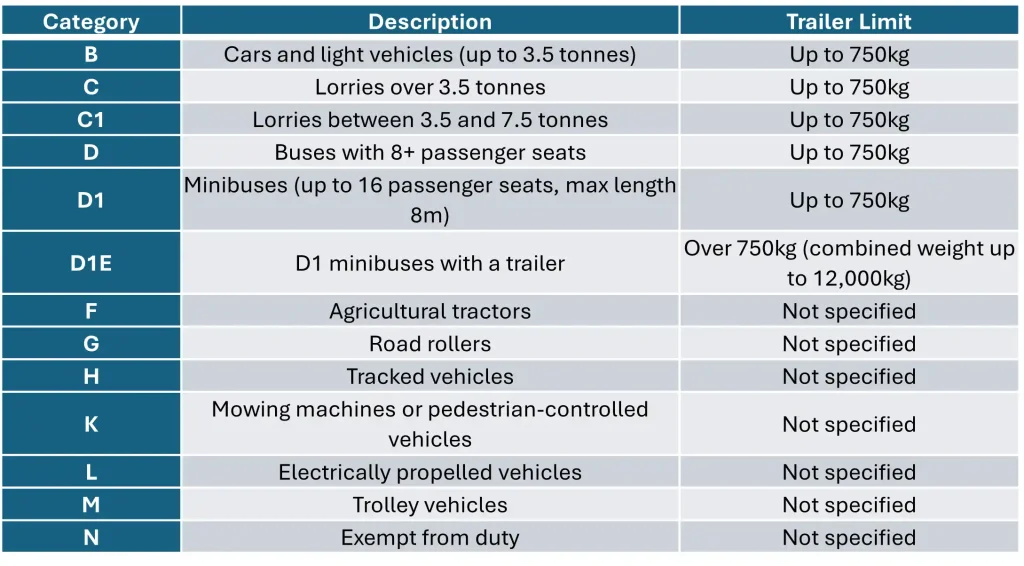
A separate D or D1 category is required. D1 allows minibuses up to 16 seats. D covers full-sized buses.
Penalties for driving passenger vehicles without proper entitlement include heavy fines and penalty points. Your insurance will not cover passenger liability.
What Bike Can I Ride With A Full Car Licence?
Motorcycle and tricycle entitlements are linked to a full car licence. You can ride mopeds and certain motorcycles without a separate motorcycle licence.
Engine size restrictions apply. You can ride a 125cc motorcycle with a power output up to 11 kilowatts. This requires displaying L plates.
Compulsory Basic Training (CBT) requirements are applicable. You must complete a CBT course every two years to ride on L plates.
Safety and legal considerations matter when switching vehicle types. Helmets are mandatory. Insurance must specifically cover motorcycle use.
What Are The Driving Licence Categories For Cars And Vans?
Driving licence categories explained in relation to cars include B, B1, and BE. These cover the spectrum from small cars to towed loads.
Categories applying to vans and light commercial vehicles are primarily Category B. Heavier vans fall under Category C1 or C.
Category B and higher vehicle classes differ by weight. C1 covers 3,500 to 7,500 kilograms. C covers anything over 7,500 kilograms.
Check your own licence categories online via the DVLA website. Enter your licence number and postcode to view your full entitlement profile.
Can Category B Be Removed From A Driving Licence?
Category B may be revoked or suspended in specific situations. This usually happens due to serious traffic offences or medical incapacity.
Medical grounds or court disqualification scenarios lead to removal. Conditions like epilepsy or severe vision loss can trigger revocation.
The process for reinstating a Category B Driving Licence involves reapplying. You may need to pass a medical assessment or a new driving test.
Administrative errors occur. Contact the Licensing Authority to correct them. Provide evidence of your original test pass if required.
Frequently Asked Questions About Category B Driving Licence
What Is A Category B Driving Licence And What Vehicles Does It Allow You To Drive In The UK?
A Category B Driving Licence allows you to drive cars and vans up to 3,500 kilograms. It permits towing small trailers under 750 kilograms. This is the standard licence for most UK motorists.
What Vehicles Can You Drive With A Category B Licence In The UK?
You can drive vehicles with up to eight passenger seats. This includes cars, pickups, and light vans. Motorcycles require separate entitlements unless under 125cc with CBT.
